
Most Milton residents know they should visit a dentist every six months. Fewer could explain what actually happens during that appointment, or why home care alone has its limits.
This guide covers what a professional oral health check-up genuinely involves, what your dentist is looking for, and why regular professional care is one of the most effective preventive steps you can take.
Why Home Care Alone Has Its Limits
Good dental hygiene, brushing twice daily with fluoride toothpaste and flossing regularly, is essential. But it has a ceiling.
Studies in dental literature indicate that brushing alone may not reach all tooth surfaces, particularly the spaces between teeth, the gumline, and rear molars where plaque accumulates most readily. The spaces between teeth, the gumline, and hard-to-reach molars are areas where plaque accumulates and eventually mineralises into tartar, a hardened deposit that no toothbrush can remove.
Tartar creates the environment where oral disease develops. Decay, gum inflammation, and periodontal disease all begin with bacterial buildup that home care cannot fully address. This is not a reflection of effort, it is simply what a toothbrush can and cannot do.
What a Professional Check-Up Actually Covers
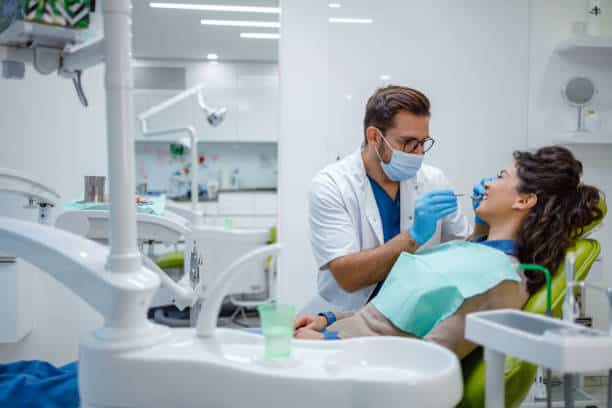
A dental check-up is not a single action. It is a structured assessment across several areas.
Clinical examination: Each tooth is examined individually for decay, cracks, worn enamel, or restorations needing attention. Soft tissues gums, tongue, cheeks, and palate are also assessed for any changes worth investigating. Where needed, oral photography or X-rays may be taken for more accurate diagnosis.
Gum health assessment: Gum tissue is checked for inflammation, recession, and pocket depth, early indicators of gum disease that are often asymptomatic in their initial stages. Regular professional check-ups can play an important role in the early detection and management of gum disease, one of the most prevalent oral conditions and a leading contributor to tooth loss.
Dental X-rays (where clinically indicated): X-rays reveal what is happening between teeth and beneath the gumline, areas where problems develop invisibly. Not every appointment requires X-rays; your dentist advises based on your clinical history.
Professional scale and clean: Specialised instruments remove plaque and tartar from all tooth surfaces, including below the gumline. Teeth are then polished to remove surface staining and smooth enamel, making it harder for plaque to adhere between visits. A fluoride solution may also be applied to help prevent decay.
Personalised oral hygiene advice: After your assessment, your dentist will provide tailored guidance on your home care routine, because effective oral care starts at home, and the right habits make a measurable difference between visits.
How Often Should You Book?
The following intervals are provided as a general guide only. Individual frequency will vary based on your clinical history and your dentist’s assessment, higher-risk patients may benefit from more frequent monitoring, and this is something to discuss at your next appointment.
| Patient Type | Recommended Frequency |
| Healthy adults | Every 6 months |
| Active gum disease | Every 3–4 months |
| Pregnant women | Every 3–6 months |
| Smokers | Every 3–6 months |
| Children | Every 6–12 months |
Your dentist will recommend a recall interval based on your specific oral health history. Higher-risk patients may benefit from more frequent monitoring, this is something to discuss at your next appointment.
What Your Dentist Is Actually Looking For
This is the part that most patients underestimate.
Broader research has identified associations between oral health and certain systemic conditions, including cardiovascular disease and type 2 diabetes, though the nature of these relationships is still being investigated. Sharing your full health history with your dentist allows them to take a more complete view of your care.
A six-monthly check-up provides a consistent window for early detection. When issues are identified early, management options are broader and generally more straightforward.
How to Prepare for Your Check-Up
A few simple steps help make your appointment as productive as possible:
- Brush and floss beforehand — Arriving with a clean mouth allows your dentist to assess your baseline gum health more accurately
- Bring your health fund card — We process claims on the spot via HICAPS
- Update your medical history — Any new medications, health conditions, or allergies are clinically relevant to your dental care
- Note any concerns — If you have noticed sensitivity, discomfort, or changes in your mouth, mention these at the start of your appointment
A Note for Families | Children’s Check-Ups

At Significant Smiles, we welcome children for regular check-ups as part of our general dentistry services.
Establishing consistent oral hygiene habits and professional monitoring from an early age is an important foundation for a child’s long-term oral health. Current guidelines recommend that children visit a dentist by their first birthday, or when their first tooth appears, whichever comes first.
Regular check-ups allow early identification of developmental concerns, decay, and hygiene habits that may need adjustment, all before they become more complex to manage.
What to Expect at Your Appointment
A check-up and clean at Significant Smiles covers a thorough clinical examination of your teeth, gums, and soft tissues, with dental X-rays taken where clinically indicated. A professional scale and clean is included to remove plaque and tartar that home care cannot reach.
The practice welcomes patients of all ages, from young children through to adults, as part of its general dentistry services.
Most major health funds are accepted, with claims processed on the spot via HICAPS. It’s worth confirming your individual cover with your fund prior to your appointment, as entitlements vary by policy.
Final Thoughts
A professional oral health check-up and clean is among the most evidence-supported preventive steps available for maintaining oral health over time.
For Milton residents, making it a consistent twice-yearly habit can support long-term oral health, allow problems to be identified earlier, and help protect your smile over time.
Disclaimer
All content on this website is intended for general information and does not replace professional dental consultation.